
Content for Website Design: The Definitive Guide for 2025
In 2025, the line between a forgettable website and a high-performing digital experience is defined by one vital factor: content for website design. Great content guides users, shapes perceptions, and transforms clicks into real results.
This definitive guide is designed to help business owners, designers, and marketers master every aspect of content for website design. You will find actionable strategies, step-by-step advice, and future-focused methods to ensure your site stands out and achieves measurable success.
Discover how to plan, create, and optimise content, write for user experience, integrate multimedia, and adapt to the latest trends. With practical examples and expert insights, you will be equipped to build digital experiences that engage, convert, and excel in the evolving landscape.
The Foundation of Effective Website Content
Content for website design is the backbone of a successful digital presence. It shapes not only the first impression but also every interaction a visitor has with your brand. Effective content guides users, communicates value, and supports both design and functionality. In this section, we explore the core principles that underpin high-performing content for website design, setting the stage for everything that follows.

Understanding the Role of Content in Website Design
Content for website design is central to shaping user journeys and perceptions. Every word, image, and call-to-action works with design and functionality to guide users towards their goals. Leading brands like Apple and Airbnb use content as a core design element, integrating storytelling with interface to create memorable, conversion-focused experiences.
Strong content for website design builds trust and clarity. It ensures that users find the information they need at the right moment, enhancing engagement and reducing friction throughout the site.
Aligning Content with Brand Strategy and Audience Needs
To maximise impact, content for website design must align with both brand strategy and audience expectations. Start by developing user personas and mapping the customer journey. This ensures messaging resonates and drives action.
Personalised content increases engagement, with 73% of users interacting more with tailored experiences (HubSpot, 2023). For deeper insight on merging brand and content, see Brand Strategy & Design Insights.
Effective content for website design speaks directly to user needs while reinforcing brand identity and values.
Setting Clear Goals and KPIs for Website Content
Objectives are essential for driving results with content for website design. Begin by defining measurable goals such as boosting engagement, increasing conversions, or improving SEO rankings. Tracking these goals allows you to adjust strategy and demonstrate ROI.
Key performance indicators (KPIs) include:
- Bounce rate
- Average session duration
- Lead generation
- Organic traffic
Analysing these metrics helps optimise content for website design, ensuring continuous improvement and measurable impact.
Content Audit: Evaluating Existing Assets
A thorough content audit is the foundation for effective content for website design. Start by inventorying all existing assets, including pages, blog posts, and media. Use tools like Screaming Frog or SEMrush Content Audit to streamline the process.
Evaluate each asset for:
- Relevance and accuracy
- Gaps and redundancies
- Opportunities for updates
Identifying strengths and weaknesses helps set priorities for new content for website design, making sure every page serves a clear purpose.
Building a Content Strategy Roadmap
Developing a roadmap ensures content for website design is planned, structured, and delivered efficiently. Map each piece of content to your site architecture and user intent, ensuring a seamless flow from landing page to conversion.
Use editorial calendars to manage production and align with design sprints. Workflow management tools keep tasks on track, facilitating collaboration between writers, designers, and developers.
A robust roadmap allows content for website design to evolve alongside user needs and business goals, supporting long-term digital success.
Planning and Structuring Content for Modern Websites
Creating effective content for website design begins with a detailed plan. Modern websites demand a strategic approach that blends information architecture, storytelling, and usability. Each step ensures your site is user-focused, accessible, and conversion-driven.

Mapping Content to User Experience (UX)
Effective content for website design relies on mapping information to the user's journey. Information architecture shapes how visitors find what they need, while content hierarchy guides their attention.
Start with wireframes to organise content blocks by user intent. Use a content-first approach, prioritising clarity before visuals. GOV.UK exemplifies user-centric content structure, placing essential information upfront and using plain language.
Consider these UX mapping steps:
- Identify key user tasks and goals
- Group information logically
- Test navigation flows early
For more on structuring for modern users, see the Design Strategy Guide for 2025.
Creating Compelling Core Pages: Home, About, Services, Contact
Each core page plays a distinct role in content for website design. The homepage should highlight your value proposition and direct users to key actions. About pages build trust, while Services detail offerings with benefits and proof.
Storytelling techniques, such as customer stories or timelines, humanise your brand. According to the Nielsen Norman Group, 86% of visitors expect product or service information on the homepage.
Key elements for core pages:
- Clear headlines and concise intros
- Visuals supporting the message
- Prominent contact options
Balance clarity, brand voice, and conversion goals on every page.
Crafting Effective Calls-to-Action (CTAs)
Strong CTAs are essential in content for website design, turning passive visitors into active leads. Placement matters, so position CTAs where users naturally pause, such as after value statements or product highlights.
Language should be direct, benefit-driven, and matched to user intent. A/B testing different CTA versions reveals what resonates best. Dropbox’s minimalist CTA approach demonstrates that simplicity can drive high engagement.
Best practices for CTAs:
- Use action verbs and clear benefits
- Ensure visual contrast from other elements
- Test and refine regularly
Optimising CTAs is a continuous process for increasing conversions.
Designing Content for Mobile and Accessibility
With 68% of traffic now mobile, mobile-first content for website design is no longer optional. Responsive layouts ensure content adapts to every screen size, while clear headings and concise text improve scanability.
Accessibility matters, too. Follow WCAG guidelines, use descriptive alt text, and write inclusive copy to reach all users. Short sentences, bullet points, and sufficient colour contrast benefit everyone.
Mobile and accessibility checklist:
- Test layouts across devices
- Use large, legible fonts
- Add accessible navigation
Prioritise both usability and inclusivity from the start.
Integrating Visual and Multimedia Elements
Visuals are central to engaging content for website design. Images, videos, and infographics break up text, clarify complex points, and boost retention. National Geographic’s immersive stories use multimedia to captivate and inform.
Optimise all media for fast loading and responsiveness. Compress images, use modern formats, and add captions for context. Consider interactive elements like image sliders or short explainer videos for added engagement.
Types of multimedia to integrate:
- Hero images and banners
- Short videos or animations
- Data visualisations
Always align visuals with your brand and message.
Streamlining Navigation and Internal Linking
Navigation is the backbone of content for website design, helping users find what they need quickly. Clear menu labels, logical page groupings, and consistent placement reduce friction.
Internal linking boosts both SEO and user experience. Link related pages and use descriptive anchor text to guide readers naturally. Hotjar and Google Analytics can reveal navigation pain points for ongoing improvement.
Internal linking strategies:
- Connect core pages and blog content
- Use breadcrumbs for orientation
- Regularly audit for broken or redundant links
Effective navigation increases engagement and time on site.
Writing SEO-Optimised Content for 2025
In 2025, the success of content for website design depends on how well it is optimised for both users and search engines. With algorithms getting smarter and user expectations rising, it is vital to create content that balances technical SEO with engaging, valuable information. Let us explore the essential strategies for writing SEO-optimised content for website design, ensuring your site ranks, converts, and stands out.
Keyword Research and Semantic Optimisation
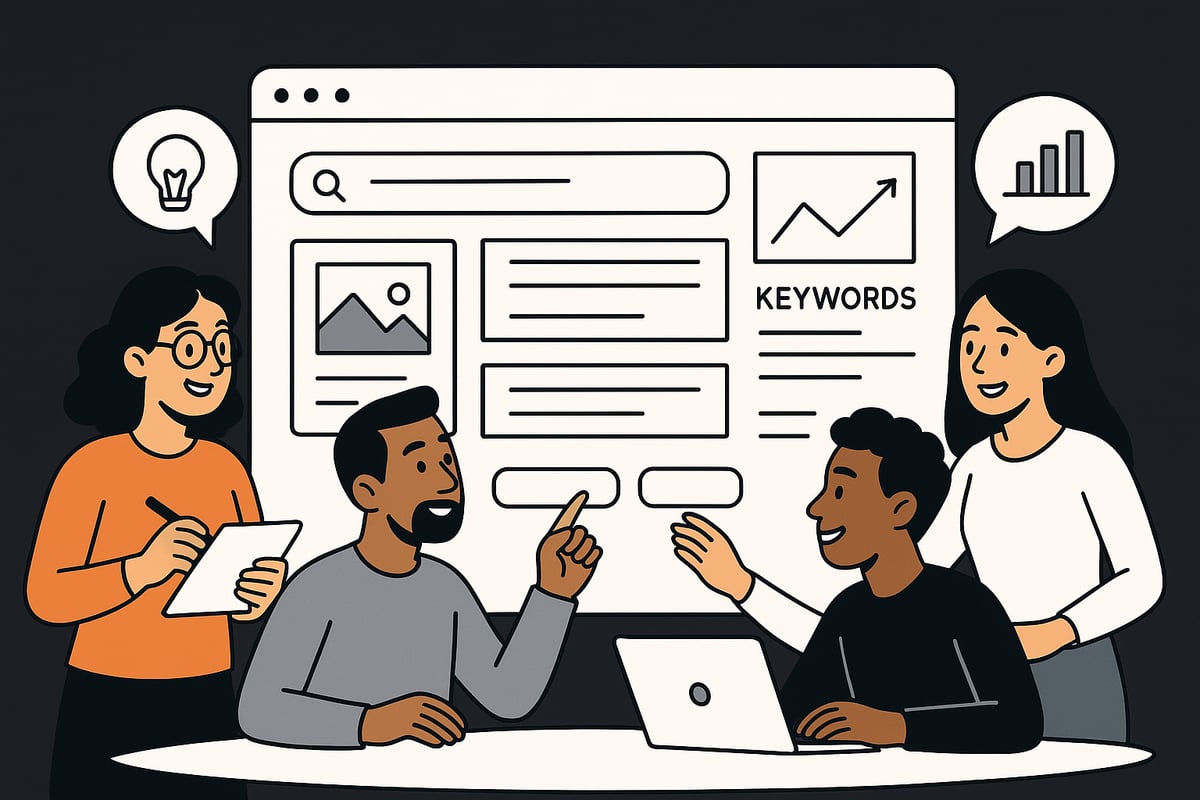
Keyword research is the foundation of effective content for website design. In 2025, AI-driven tools like Surfer SEO and SEMrush help identify high-value keywords and uncover semantic variations that reflect real user intent. By organising keywords into topic clusters and pillar pages, you create a logical structure that search engines and users appreciate.
For example, mapping related phrases and questions to each section of your site increases authority and relevance. When planning content for website design, always start with in-depth keyword research to ensure every page aligns with how your audience searches.
On-Page SEO Best Practices
On-page SEO remains crucial for visibility. Properly structured headings, optimised meta tags, and clear content hierarchy make your site easy to crawl and understand. Writing for featured snippets and voice search means using concise, direct answers and natural language.
Consider the statistic: 58% of searches are now zero-click, so your content for website design must deliver immediate value. For more details on aligning SEO and content with web projects, see Website Design & Development Services.
Balancing Readability and Depth
Readability is key for user engagement. Break text into short paragraphs, use bullet points, and add subheadings to guide readers. At the same time, in-depth content demonstrates expertise and builds trust. The best content for website design balances scannability with comprehensive, authoritative information.
A good example is Moz’s detailed guides, which combine accessible formatting and rich, valuable insights. Aim to educate, not overwhelm, while staying focused on your users’ needs.
Integrating Structured Data and Schema Markup
Structured data and schema markup help search engines understand your content for website design, increasing the chance of rich results. Mark up articles, products, FAQs, and more using tools like Google Structured Data Markup Helper.
For instance, recipe or product schema can boost click-through rates with enhanced listings. By integrating schema, your content for website design stands out in search and drives more qualified traffic.
Avoiding Duplicate and Thin Content
Duplicate and thin content harm both rankings and user trust. Use tools like Screaming Frog to identify duplicate pages or low-value content for website design. Focus on creating unique, original assets that offer genuine value.
Google penalises websites with more than 20% duplicate content, so review your site regularly. Fill content gaps and consolidate overlapping pages to maintain a strong, authoritative presence.
Measuring SEO Content Performance
Track the effectiveness of your SEO efforts with clear metrics. Monitor organic traffic, ranking positions, and dwell time using Google Search Console and analytics platforms. Regularly review these insights to refine your content for website design and achieve your goals.
An iterative approach, based on real data, ensures your content evolves in line with user behaviour and search trends. Continuous optimisation keeps your website performing at its best.
Integrating Advanced Content Types and Technologies
Adapting content for website design to the demands of 2025 means embracing innovative content types and technologies. These approaches not only engage users but also drive measurable business results. Let us explore how interactive tools, video, personalisation, voice, and AI are redefining what effective websites can achieve.

Interactive Content: Quizzes, Calculators, and Tools
Interactive content for website design transforms passive browsing into active engagement. Tools like quizzes, ROI calculators, and assessments offer value while collecting insights. For example, HubSpot’s calculators and BuzzFeed’s quizzes are prime drivers of user participation.
Benefits include higher dwell time, lead generation, and increased data capture. In fact, interactive content generates twice as many conversions compared to static formats. To maximise impact, ensure your interactive elements align with user intent and remain accessible across devices.
Integrating interactive content for website design sets your brand apart by making the user journey memorable and actionable.
Video and Animation in Website Content
Video and animation are now essential for compelling content for website design. Video backgrounds and explainer videos quickly communicate complex ideas, while micro-animations guide users through interfaces with clarity.
Slack’s onboarding experience is a great example, using concise videos and subtle animations to build trust and guide new users. Best practices include compressing files for speed, providing captions for accessibility, and ensuring videos do not autoplay with sound.
By integrating dynamic content for website design, you boost storytelling and keep users engaged longer, which positively affects both SEO and user satisfaction.
Personalisation and Dynamic Content Delivery
Personalisation is revolutionising content for website design, making each visit feel uniquely tailored. AI-driven engines serve product recommendations and adaptive landing pages based on real-time user behaviour. This not only improves the user journey but also increases conversion rates by up to 42 percent.
To explore how AI-powered personalisation is shaping the future of web experiences, see this overview of AI-Powered Personalization in Web Design.
For effective implementation, segment audiences, use dynamic modules, and always respect data privacy. Personalised content for website design delivers measurable business value.
Voice Search and Conversational Content
The rise of voice search is changing how we approach content for website design. More users are interacting with websites through smart assistants, expecting natural, conversational responses. Brands like Domino’s have leveraged voice-activated ordering to streamline conversions.
Optimise for voice by using natural language, structuring content in question-and-answer formats, and ensuring fast load times. Integrate chatbots and conversational UI elements to provide instant support and relevant information.
Prioritising conversational content for website design ensures your site remains accessible and competitive in a voice-driven digital landscape.
AI-Generated and Automated Content
AI-generated content is now a core part of content for website design strategies. Platforms like ChatGPT and Jasper create product descriptions, news summaries, and FAQs at scale, freeing up human teams for higher-level tasks.
However, automated content must be reviewed for accuracy, relevance, and brand alignment. Editorial oversight is crucial to maintain authenticity and trust. The Guardian’s use of AI for news summaries demonstrates how automation can support, but not replace, expert content creation.
Embracing AI-driven content for website design enables rapid scaling while upholding quality and consistency.
Content Governance, Workflow, and Collaboration
In today’s digital landscape, content for website design is no longer a solo pursuit. Effective governance, workflow, and collaboration are key to ensuring your website’s content remains accurate, engaging, and aligned with both your brand and user needs. Let’s explore how you can set up a robust system that supports every stage of your content lifecycle.
Building a Content Team and Defining Roles
A successful content for website design project starts with assembling the right team. Key roles include a content strategist to set direction, writers to craft messaging, editors to ensure quality, designers to create visual harmony, and SEO specialists to drive visibility.
Whether you build your team in-house, outsource to an agency, or work with freelancers, clarity in responsibilities is vital. For example, Spotify’s multidisciplinary teams bring together these specialisms to deliver unified content experiences. To see how leading agencies integrate these roles, review About Harley Oliver's Approach for their strategic model.
Establishing Editorial Guidelines and Brand Voice
Consistency is foundational in content for website design. An editorial style guide defines tone, language, and visual standards, ensuring every team member communicates your brand’s essence.
Such guidelines help maintain a unified voice across channels, whether your site is informative, playful, or formal. Mailchimp’s Voice & Tone guide is a standout example, offering clear direction for writers and designers alike. Establishing these standards streamlines onboarding and reduces revisions, making your content for website design more efficient and coherent.
Workflow Management: Tools and Processes
Managing content for website design efficiently requires the right tools and processes. Project management platforms like Asana, Trello, and Monday.com enable teams to track progress, assign tasks, and manage deadlines.
Implementing a structured approval workflow ensures each piece of content is reviewed before publishing. Version control prevents errors, while analytics dashboards provide insights into performance. According to the Content Marketing Institute, teams using workflow tools deliver projects 30 percent faster, highlighting the impact of streamlined content for website design processes.
Collaboration Between Designers, Developers, and Writers
True innovation in content for website design happens when designers, developers, and writers work together seamlessly. Bridging the gap between content and design avoids silos and ensures user needs are prioritised.
Using design systems and shared documentation, such as Figma’s collaborative features, helps teams stay aligned throughout the project. Regular check-ins and open communication foster a culture of shared ownership, making it easier to adapt as requirements evolve and deliver cohesive digital experiences.
Maintaining and Updating Website Content
Sustaining high-performing content for website design is an ongoing process. Schedule regular audits to assess accuracy, relevance, and performance. Refresh outdated sections, remove redundancies, and respond quickly to industry trends or business changes.
Tools for monitoring site health—such as automated alerts or content management dashboards—help ensure your website remains agile and effective. By prioritising continuous improvement, you future-proof your content for website design and maintain your competitive edge.
Future Trends and Innovations in Website Content for 2025
The future of content for website design is defined by rapid innovation and technological advancement. In 2025, brands must embrace forward-thinking strategies to stay ahead. From AI-driven insights to immersive experiences, each trend is reshaping how audiences interact with digital content. Let us explore the key innovations that will transform content for website design in the coming year.
AI and Machine Learning for Content Strategy
Artificial intelligence is revolutionising content for website design by enabling predictive analytics and hyper-personalised experiences. AI tools now analyse user behaviour to recommend content, predict trends, and automate audits. Brands like Netflix use AI-driven curation to keep audiences engaged and returning.
Looking ahead, content for website design will also be shaped by Generative Engine Optimization, a new discipline focused on optimising content for AI-powered search results and assistants. As AI continues to evolve, expect smarter content recommendations and more efficient workflows.
Augmented Reality (AR) and Immersive Experiences
AR is set to become a game changer in content for website design. It allows users to visualise products in their own environment or engage with interactive storytelling. Early adopters such as IKEA Place and Sephora Virtual Artist have already proven the value of AR for boosting engagement and driving sales.
With 1.7 billion AR device users projected by 2025 (Statista), businesses must consider how immersive experiences can enhance their digital presence. Integrating AR can set your brand apart and make content for website design truly memorable.
Sustainability and Ethical Content Practices
Sustainability and ethics are now central to content for website design. Audiences demand accessible, inclusive, and environmentally responsible content. Ethical considerations are especially important as AI-generated content becomes more common, with transparency and fairness at the forefront.
Organisations like the BBC are leading the way with digital accessibility initiatives. Prioritising these principles ensures content for website design reaches everyone and builds long-term trust.
Privacy, Data Protection, and Content Personalisation
Balancing personalisation with privacy is a top priority for content for website design. With GDPR and other regulations, brands must be transparent about data collection and secure explicit user consent.
According to Pew Research (2024), 79% of users are concerned about data privacy. The challenge is to deliver relevant, personalised experiences while respecting user rights. Future content for website design will rely on robust data practices and clear privacy policies.
The Rise of Headless CMS and Omnichannel Content
Headless CMS platforms are reshaping content for website design by enabling flexible, scalable delivery across multiple channels. This approach decouples content management from presentation, allowing brands to push updates to web, mobile, and emerging platforms seamlessly.
Nike’s omnichannel content strategy is a prime example of managing content for website design efficiently across touchpoints. As digital ecosystems expand, headless CMS will be key to delivering consistent experiences everywhere your audience interacts.